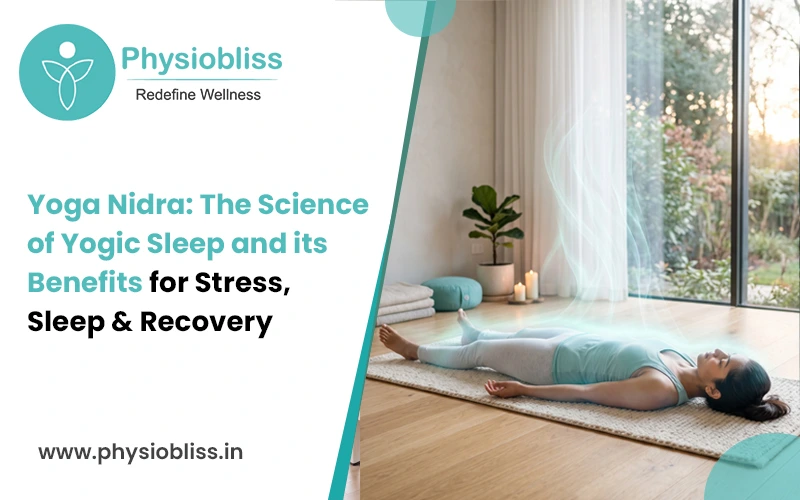
In today’s fast-moving world, stress has become constant. Sleep is disrupted. Recovery feels incomplete. And even when we “rest,” the mind continues racing. This is where Yoga Nidra, often called yogic sleep, is gaining global attention. Doctors, physiotherapists, mental health professionals, and even elite athletes are now recommending Yoga Nidra for stress reduction, sleep improvement, and faster physical recovery.
At Physiobliss, a Yoga centre in Vadodara, we integrate evidence-based Yoga Nidra practices into our yoga and recovery programmes to help clients restore balance, mentally and physically. If you’ve been searching for yoga nidra benefits science stress recovery, this guide will explain exactly what it is, how it works in the brain, and why it may be one of the most powerful tools for modern well-being.
What Exactly Is Yoga Nidra? Origins and Meaning
What Is Yoga Nidra?
The term Yoga Nidra comes from Sanskrit:
- Yoga = Union or Awareness
- Nidra = Sleep
But it is not ordinary sleep.
Yoga Nidra is a structured, guided meditation practice that brings the body into deep relaxation while keeping the mind in a state of conscious awareness. It originated from ancient yogic traditions and was systematized in modern form by Swami Satyananda Saraswati in the 20th century.
Unlike physical yoga postures, Yoga Nidra is practised lying down in a comfortable position, usually in Shavasana.
The Critical Difference Between Yoga Nidra and Meditation
Many people confuse Yoga Nidra with regular meditation. They are related but not identical.
Yoga Nidra uses a systematic rotation of consciousness through the body, breath awareness, and visualization to induce a state between wakefulness and sleep. This unique state is where the real neurological magic happens.
What Happens in the Brain During Yoga Nidra?
Modern neuroscience has increasingly begun examining Yoga Nidra and related deep relaxation practices to understand what truly happens inside the brain during “yogic sleep.” Unlike ordinary relaxation, Yoga Nidra produces measurable neurological changes. These changes have been observed through electroencephalography (EEG), functional MRI studies, and autonomic nervous system research.
What Is NSDR?
NSDR (popularized by neuroscientists like Dr. Andrew Huberman) refers to guided relaxation techniques that allow a deep nervous system reset without actual sleep. Yoga Nidra is considered one of the original NSDR methods.
Why This Matters
When the brain enters alpha and theta states:
- Cortisol levels drop
- Parasympathetic nervous system activates
- Heart rate slows
- Blood pressure stabilizes
- Muscle tension reduces
In simple terms: your body shifts from “fight or flight” to “rest and repair.”
Evidence-Based Benefits: Stress, Sleep and Recovery
1. Stress Reduction
Chronic stress keeps the nervous system stuck in sympathetic overdrive.
Yoga Nidra:
- Lowers cortisol
- Improves vagal tone
- Reduces anxiety markers
- Improves emotional regulation
For individuals dealing with high-pressure jobs in Vadodara’s corporate and business environments, this can be transformative. You may also explore our Yoga for Anxiety blog for related guidance
2. Sleep Improvement
If you struggle with insomnia or light, disturbed sleep, Yoga Nidra can help.
Research shows it:
- Improves sleep latency (falling asleep faster)
- Increases deep sleep duration
- Reduces nighttime awakenings
- Enhances overall sleep quality
Practising yoga nidra for sleep before bedtime often helps regulate circadian rhythms. Many people report that 30 minutes of Yoga Nidra feels like 2–3 hours of restorative rest.
3. Pain Management Support
Yoga Nidra does not replace physiotherapy, but it enhances it. Chronic pain is closely tied to nervous system sensitivity. By calming the central nervous system, Yoga Nidra:
- Reduces pain perception
- Lowers muscle guarding
- Improves body awareness
- Enhances rehabilitation compliance
It is particularly helpful for:
- Chronic lower back pain
- Neck tension
- Fibromyalgia
- Post-surgical recovery
You may also read our Mental Health Yoga blog to understand mind-body integration further.
How to Practise Yoga Nidra — Step-by-Step
Here is a basic beginner-friendly session outline.
Step 1: Preparation
- Lie comfortably on your back
- Use a pillow or bolster if needed
- Keep room quiet and slightly dim
- Avoid heavy meals beforehand
Step 2: Set an Intention (Sankalpa)
Silently repeat a positive affirmation, such as:
“I am calm and relaxed.”
This intention plants a seed in the subconscious.
Step 3: Body Rotation Awareness
Your instructor guides attention systematically through:
- Right hand
- Right arm
- Left hand
- Left arm
- Legs
- Torso
- Face
This reduces muscular tension
Step 4: Breath Awareness
Observe natural breathing without controlling it.
Step 5: Visualization
You may be guided through calming imagery such as ocean waves or warm sunlight.
Step 6: Return to Awareness
Gradually bring attention back to the room before opening your eyes.
Total duration: 20–40 minutes.
Who Can and Cannot Safely Practise Yoga Nidra?
Safe For:
- Adults of all ages
- Elderly individuals
- Athletes
- Office professionals
- Individuals managing anxiety
- Those recovering from injury
Caution Required For:
- Severe untreated psychiatric disorders
- Active trauma without professional supervision
Experience Yoga Nidra in Our Expert-Led Classes
Give your mind and body the rest they deserve. Experience Yoga Nidra in Our Expert-Led Classes at Physiobliss Vadodara — Your Mind Deserves Rest.
Book your session today and begin your journey toward deeper relaxation and recovery.