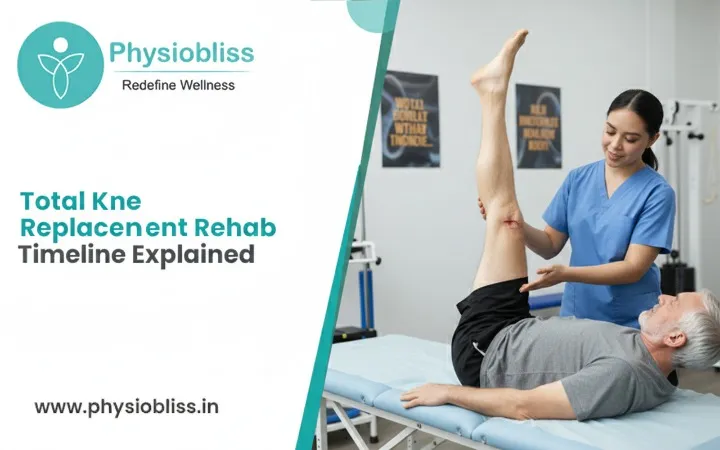
It’s completely normal to feel anxious after a knee replacement surgery. You might wonder: How long will it take to get back on my feet? When will walking feel normal again? What kind of exercises are actually safe right now? Total knee replacement surgery can be a turning point, offering relief from chronic pain and a chance to return to a more active life.
Total knee replacement rehabilitation typically takes 8 to 12 weeks and involves structured physiotherapy focused on pain control, mobility, muscle strengthening, and walking retraining.
In this blog, we’ll walk you through the full recovery timeline after a total knee replacement, what typically happens week by week, what signs of progress to look for, and how the right physiotherapy approach can accelerate healing, improve mobility, and help you avoid setbacks.
What is Knee Replacement Rehab?
Knee replacement rehabilitation is a guided recovery process that helps patients rebuild strength, mobility, and confidence after surgery. It’s not just about healing, it’s about helping you return to daily activities safely and as quickly as possible. This is where expert care matters. At Physiobliss physiotherapy center in Vadodara, patients receive personalized, evidence-based rehabilitation programs tailored to their surgery type, age, fitness level, and recovery goals. Give us a call to book an appointment with us!
The main objectives of knee replacement rehab are to:
- Ease pain and reduce swelling
- Regain knee flexibility and range of motion
- Strengthen the muscles that support the joint
- Improve balance, walking, and everyday function
- Prevent stiffness, blood clots, and other post-surgical complications.
With the right support and a consistent rehab plan, patients can make steady progress toward a more active, pain-free life. Physiobliss provides comprehensive care for post-surgical knee rehabilitation, combining manual therapy, pain management, advanced electrotherapy, and targeted strength and gait training.
How Physiotherapy Helps in Recovery from Knee Replacement?
Physiotherapy is the cornerstone of knee replacement recovery. Without it, patients risk stiffness, muscle weakness, and delayed healing.
Here’s how physiotherapy supports recovery across the rehab timeline:
Week 1–2: Early Recovery Phase
Physiotherapy begins with gentle movements to manage pain and swelling. Exercises focus on:
- Knee bending and straightening
- Ankle pumps to improve circulation
- Assisted walking with support
Week 3–6: Strength and Mobility Phase
As healing progresses, therapy shifts to rebuilding strength and improving movement. Focus areas include:
- Strengthening the quadriceps and hamstrings
- Enhancing walking patterns
- Balance and coordination exercises
Week 7–12: Functional Independence Phase
The goal now is to return to daily life with confidence. Therapy targets:
- Stair climbing and step control
- Sit-to-stand movements
- Flexibility and endurance training
At a trusted physiotherapy hospital in Vadodara like Physiobliss, experienced therapists closely monitor your progress and tailor exercises at every stage, helping you recover safely and regain independence, step by step. Book your appointment now.
Other Physical Therapies That Help Post-Operative Rehabilitation
In addition to standard physiotherapy exercises, several supportive therapies can significantly enhance recovery after a knee replacement:
- Manual Therapy: Hands-on techniques to relieve stiffness and improve joint mobility
- Electrotherapy: Treatments like TENS and ultrasound to reduce pain and inflammation
- Cryotherapy (Cold Therapy): Helps manage swelling and promotes faster healing
- Hydrotherapy: Gentle water-based exercises that build strength with less strain on the joints
- Gait Training: Focuses on correcting walking patterns to prevent long-term imbalance
When used together as part of a personalized rehab plan, these therapies can speed up recovery and improve overall outcomes. This well-rounded approach is one of the reasons Physiobliss is recognized among the top physiotherapy clinics in Vadodara.
Conclusion
Recovering from a total knee replacement doesn’t have to be overwhelming. With a clear understanding of the rehabilitation process and the right physiotherapy support, you can move from discomfort to confident, pain-free mobility.
At Physiobliss Physiotherapy Center, patients benefit from expert-led care, fit India, modern techniques, and personalized recovery plans tailored to each stage of healing. Whether you’re beginning your rehab journey or planning, partnering with a trusted physiotherapist in Vadodara can make all the difference, helping you heal faster, move better, and stay active for the long term. Choose physiobliss, choose holistic healing. Book an appointment now!
FAQs – Common Questions about Physiotherapy
Physiotherapy usually starts within 24 hours after surgery and continues for 8 to 12 weeks, depending on the patient’s age, fitness level, and healing speed. Regular sessions at a trusted physiotherapy centre in Vadodara help improve mobility faster and reduce long-term stiffness.
Yes, physiotherapy is essential. Without proper rehab, patients may experience pain, limited knee movement, and muscle weakness. A structured program at the best physiotherapy clinic in Vadodara, such as Physiobliss, ensures safe recovery, better strength, and a quicker return to daily activities.
Most patients begin assisted walking within a few days after surgery. With consistent physiotherapy, normal walking patterns usually improve within 6 to 8 weeks, while full functional recovery may take up to 3 months or more.