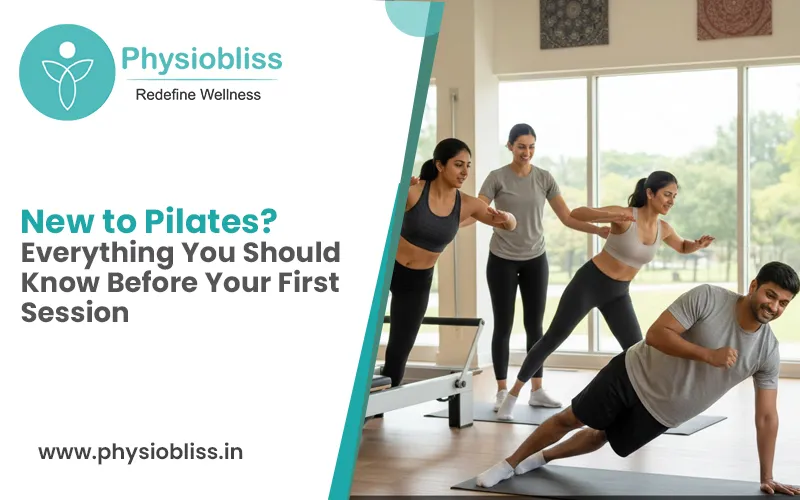
Have you been thinking about trying Pilates but feel unsure about what to expect? You’re not alone. Many people feel slightly intimidated when starting a new fitness routine, especially one they’ve never experienced before. The good news is that Pilates for beginners is designed to be welcoming, adaptable, and safe for all fitness levels. It focuses on controlled movements, core strength, posture, and flexibility rather than high-impact intensity.
At Physiobliss, we guide individuals through their first Pilates session with professional supervision and personalized attention, ensuring every movement is performed safely and effectively. Whether your goal is to improve posture, build strength, recover from back discomfort, or simply begin a sustainable fitness routine, Pilates can be an excellent starting point. Let’s walk through what you can expect in your first Pilates class so you feel confident, prepared, and ready to begin.
What Happens in Your First Pilates Session?
Your first session is not about pushing your limits; it’s about learning how your body moves.
At Physiobliss, every new participant begins with a brief assessment. This helps us understand posture alignment, core activation patterns, previous injuries, and overall mobility. Unlike generic workout spaces, a clinically guided approach ensures that exercises are tailored safely.
During your first class, you can expect:
- Gentle warm-up movements
- Focused breathing techniques
- Core activation drills
- Slow, controlled repetitions
- Attention to posture and spinal alignment
If you are joining pilates classes in Vadodara, it’s important to choose a setup where instructors observe form closely. Pilates is all about precision, and small movements done correctly produce better results than large, rushed motions.
It’s Normal to Feel Muscle Activation
One of the most common surprises beginners experience is muscle shaking, especially during core exercises. This is completely normal.
Pilates works on deep stabilizing muscles, particularly the transverse abdominis, pelvic floor, and spinal stabilizers. These muscles may not be regularly activated in daily life. When engaged properly, they can feel unfamiliar but not painful.
There’s a clear difference between:
- Mild muscle fatigue (normal)
- Sharp or radiating pain (not normal)
Under proper supervision, especially in a structured pilates studio in Vadodara, instructors will guide breathing and alignment to prevent strain.
Read: Pilates Helps in Weight Loss and Body Toning
What Should You Wear & Bring?
Pilates doesn’t require heavy equipment for beginners. Comfortable, fitted clothing works best so instructors can observe alignment. Avoid very loose clothes as they may hide posture cues.
You’ll need:
- Breathable, stretch-friendly attire
- A water bottle
- An open mind
If you’re attending your first session of pilates in Vadodara, arriving 10–15 minutes early helps you settle in comfortably and discuss any concerns with your instructor.
Don’t Expect a High-Intensity Cardio Workout
Pilates is not about sweating excessively or jumping. It is controlled, low-impact, and technique-focused. That said, it can be surprisingly challenging.
The emphasis is on:
- Core strength
- Controlled breathing
- Muscle endurance
- Postural awareness
Many beginners underestimate how powerful slow, precise movements can be. Over time, this approach improves strength without overloading joints, making it suitable for individuals recovering from mild back discomfort or posture-related issues.
Common Beginner Mistakes to Avoid
To make the most of your first session, avoid these common mistakes:
- Holding Your Breath Breathing is central to Pilates. Controlled inhalation and exhalation support core engagement.
- Rushing Movements Pilates is about quality, not speed.
- Comparing Yourself to Others Everyone’s mobility and strength differ. Progress is individual.
- Ignoring Alignment Cues Subtle posture corrections make a significant difference.
If you’re exploring pilates Vadodara options, choosing a professional setup like Physiobliss that prioritizes correction and technique ensures safer progress.
Is Pilates Suitable for Everyone?
Pilates is adaptable, but modifications matter.
You should consult a professional before beginning if you have:
- Recent surgery
- Severe slip disc or spinal injury
- Advanced osteoporosis
- Pregnancy (unless supervised)
A guided program ensures exercises are adjusted according to individual needs. Clinical supervision adds an extra layer of safety and effectiveness.
How to Prepare Mentally for Your First Session
Starting something new can feel intimidating, but Pilates is not competitive. The first class is about learning body awareness.
Remember:
- It’s okay to ask questions
- It’s normal to feel slightly challenged
- Progress happens gradually, not overnight
Consistency matters more than intensity.
FAQs – Common Questions about Physiotherapy
Yes, Pilates is beginner-friendly and adaptable to different fitness levels. Most introductory sessions
focus on learning proper breathing, core activation, and posture alignment rather than intense
movements. With professional guidance, beginners can start safely and progress gradually.
Pilates should not cause sharp or radiating pain. You may feel mild muscle fatigue or slight shaking —
especially in the core — which is normal. If you experience discomfort, exercises should be modified
under supervision.
For beginners, 2–3 sessions per week are ideal. Consistency is more important than duration. Over time,
regular practice improves strength, flexibility, and posture.
While both focus on controlled movement and breath awareness, Pilates emphasizes core strength, spinal
stability,
and muscle control. Yoga
typically includes more flexibility and mindfulness-based flow sequences.