
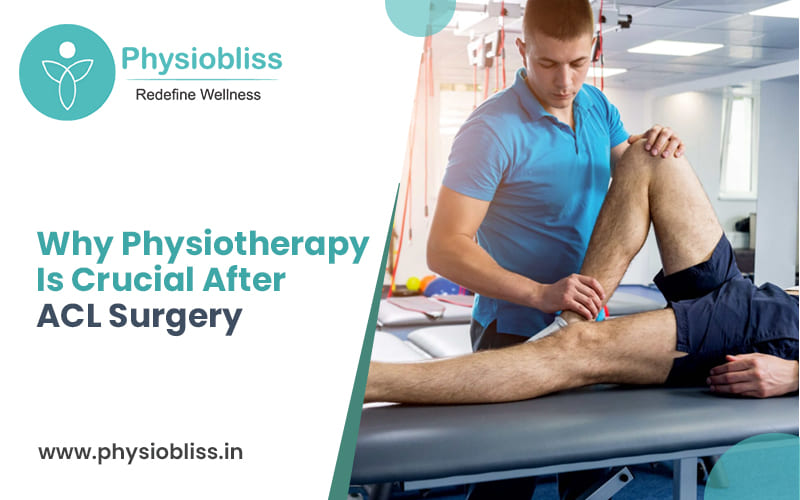
The ACL, or anterior cruciate ligament, is a critical component for knee joint functions, mobility, and flexibility. In case of injury or complete ACL burst or tear, the complete ACL is reconstructed through surgery. The ACL reconstruction surgery includes taking tissues from the patient’s body (autograft). After the surgery, physiotherapy rehabilitation is necessary to help a person gain range of motion, flexibility, and complete mobility. In this blog, we will discuss in depth the role of physiotherapy after ACL surgery.
Role of Anterior Cruciate Ligament in a Knee Joint
An excessive forward motion of the knee is prevented by the ACL. It prevents the shinbone from moving far ahead of the thighbone. It also helps in gaining full control over rotation and preventing it from twisting or pivoting. Therefore, ACL injuries are very common in athletes and sports enthusiasts, as they run at high velocity and take sudden turns.
ACL surgery is the best option for a complete ACL tear, followed by a structured physiotherapy routine. If you have been experiencing severe knee joint pain due to ACL, opt for physiotherapy. Physiobliss is the best physiotherapy clinic in Vadodara, providing tailored therapy programs for ACL injuries. Our facility is fully equipped with modern equipment and facilities. Our physiotherapist lends complete support to the patient, deeply analyzes their concerns, and develops the best-suited tailored program. Call us now to book an appointment.
Role of Physiotherapy After an ACL Reconstruction Surgery
There are a number of benefits associated with physiotherapy rehabilitation post-surgery. Let’s look at a few of them in detail.
#1 Strengthening Muscles and Enhancing Stability: After the ACL surgery, the knee is extremely sensitive and needs to gain strength. The goal of physiotherapy is to strengthen the muscles around the knee, especially the calf, quadriceps, and hamstrings. This lowers the chance of subsequent fractures and improves the knee’s strength, stability, and flexibility.
#2 Regaining Range of Motion: Loss of range of motion and flexibility may result from the formation of scar tissue and immobilization following surgery. Consequently, manual therapy and mild stretches are used to gradually regain range of motion and normal joint movement.
#3 Scar Tissue Remodeling: Scar tissue forms as a part of the healing process. However, excessive scar tissue can lead to restricted movement and impede optimal function. Physiotherapy exercises can assist in stretching, breakdown, and remodeling of scar tissue. It promotes accurate healing and tissue alignment.
#4 Returning to Normality: Physiotherapy exercises help a patient transition from basic to advanced and sport-specific exercises. Physiotherapists work closely with the patient and monitor its progress. Ensuring a safe return to desired daily activities.
Conclusion
Physiotherapy is an indispensable part of ACL surgery rehabilitation. It offers a wide range of benefits, including enhanced strength, regained balance, knee stabilization, and a smooth return to normal life. At Physiobliss, Dr. Richa Goswami, the top physiotherapist in Vadodara, provides the best customized plans for ACL recovery. We are fully equipped with modern modalities and other equipment necessary to suit the needs of every patient. We believe in a holistic approach to every problem and helping patients achieve a healthy, fit life. Call us to book your appointment.
Also Check: Types of Physiotherapy Treatments