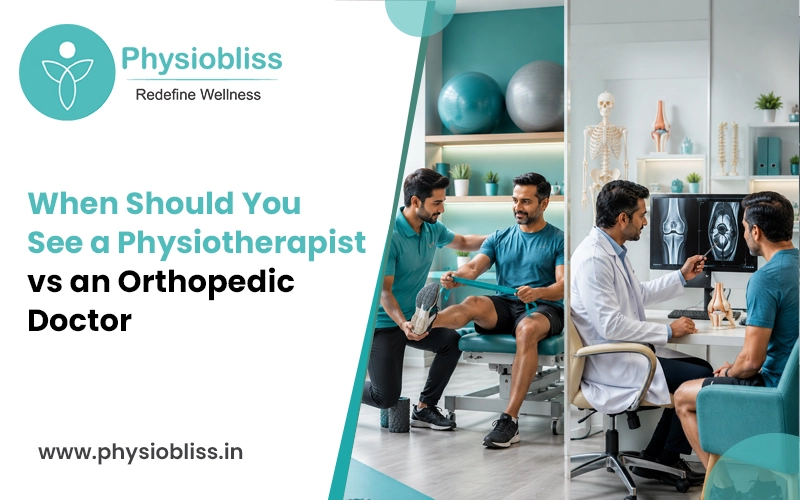
The healthcare field is multidisciplinary, with varying professionals specializing in diverse areas. Musculoskeletal pain arising from severe back pain or a sprain, people are often confused about whether to consult an orthopedic doctor or a physiotherapist. The confusion between ortho vs physio is very common. In this blog, we aim to clear the confusion between ortho vs ortho and help you choose the treatment for your condition.
Understanding the Roles: Physiotherapist vs an Orthopedic Doctor
Physiotherapists and orthopedic play a complementary role in the healthcare landscape. When we speak of an orthopedic doctor, they are medical doctors specializing in diagnosing and treating conditions affecting the musculoskeletal system. On the other hand, a physiotherapist in Vadodara specializes in pain management, rehabilitation, mobility training and overall bodily restoration through exercise, therapeutic modalities and manual therapies.
Ortho Vs Physio: Commonly Treated Conditions
#1 Common Conditions Treated by Orthopedic Doctors
- Back pain & spinal injuries
- Joint & ligament injuries
- Fractures & dislocations
- Osteoarthritis & rheumatoid arthritis
- Torn ligaments
#2 Common Conditions Treated by Orthopedic Physiotherapists
- Neurological conditions
- Sports injuries
- Musculoskeletal injuries
- Post-surgery rehabilitation
- Posture correction
- Ergonomic habits
Physiotherapy & Orthopedics Treatment Approaches
It is important to understand physiotherapy and orthopedic approach to treatment towards patient recovery.
A typical physiotherapy intervention at a physiotherapy clinic in Vadodara includes:
- Therapeutic Modalities: This includes modalities like TENS, heat, cold, ultrasound, electrical stimulation and other modalities to relieve pain & discomfort.
- Manual Therapy: Hands-on manual techniques relieve pain and improve range of motion.
- Exercise Therapy: Exercise therapies enhance strength, coordination and mobility.
- Education: It includes creating awareness of posture, self-management exercises, and ergonomics.
A typical orthpedic intervention includes:
- Diagnostic Imaging: Using MRIs, X-rays, and CT scans to detect conditions.
- Medication Management: Prescribing pain-relief medications, anti-inflammatory medicines and referring to a physiotherapy centre in Vadodara to relieve pain.
- Surgical Procedures: Fracture repairs, ACL reconstruction, tendon repair, fracture repair, joint replacements and arthroscopy.
When Should You See a Physiotherapist vs an Orthopedic Doctor?
Understanding the right medical intervention at the right time can significantly improve recovery time and outcome.
#1 When to Consult a Physiotherapist
- You are suffering from muscle sprains and need to regain range of motion.
- Post-surgical rehabilitation is needed after surgery
- Chronic pain that needs mechanical correction
- You want to improve mobility and bodily function after an injury
#2 When to Consult an Orthopedic Doctor
- You have sustained an injury or dislocation that needs medical intervention
- Chronic conditions like arthritis or rheumatoid
- Persistent joint pain that impacts daily activities
Read: Effective Physical Therapy For Osteoarthritis
Recognizing the Complementary Role of Physiotherapy & Orthopedics
It is important to understand how these multidisciplinary areas complement each other to enhance patient care. Similarly, at Physiobliss, Yoga, Pilates, Aerobics, Clinical Fitness Centre, Women’s Health and physiotherapy complement each other to cater to patient health needs. Whether you seek post-surgical rehabilitation or are simply looking to enhance overall well-being, we at Physiobliss have you covered! For an appointment, call us today.