
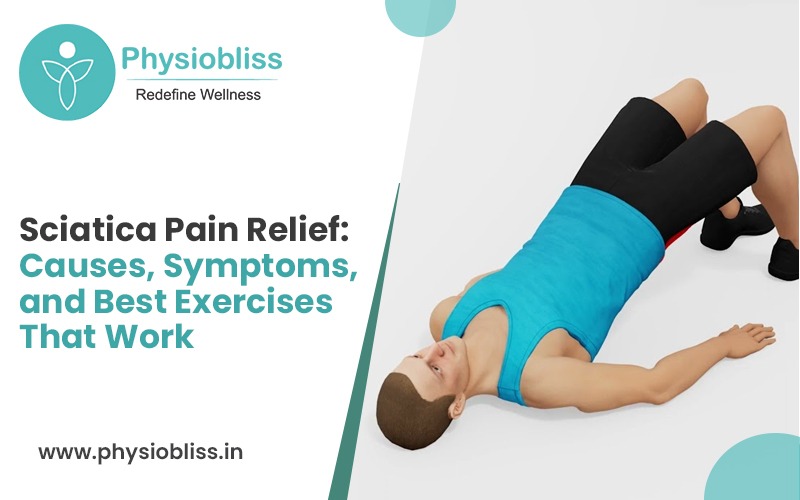
Sciatica can be characterized as a radiating pain that runs down your lower back to your legs. This occurs for many reasons that we will discuss ahead in the blog. Sciatica usually does not require special treatment and is known to heal on its own; in some cases, with severe pain, it may require the intervention of an orthopedic doctor. In this blog, we will learn about what exactly sciatica is, what causes it, and how physiotherapy can help in faster recovery from it.
What is Sciatica?
Sciatica is a medical term given to pain that arises from pinching or compression of a nerve in the lower back region. This pain is usually accompanied by tingling or numbness in the back and butt region. With a bundle of nerves inside, the sciatic nerve is the longest and thickest nerve. It runs down through the buttocks to the knee, from where they scatter and serve other parts of the leg. There are two types of sciatica: true sciatica and sciatica-like conditions. However, doctors refer to both as sciatica because they both give out the same symptoms. At Physiobliss, our experienced physiotherapist in Vadodara believes sciatica is curable through a detailed physiotherapy plan curated by an experienced physiotherapist. If you are facing the same kind of pain, give us a call and trust Physiobliss for your recovery journey.
Causes and Symptoms
Sciatica is caused when the sciatic nerve suffers pinching or compression. Therefore, it is also associated with conditions like a herniated disc, degenerative disc, spinal stenosis, foraminal stenosis, spondylolisthesis, osteoarthritis, injury, pregnancy, or tumours—some of its most common symptoms include radiating pain in the affected leg with sneezing, bending, or lifting your legs upwards. You might also feel a prolonged tingling, numbness, or muscle weakness. One of the most serious symptoms of sciatica is losing control.
How Physiotherapy Can Help Manage Sciatica Pain
Physiotherapy exercises have shown great effectiveness in relieving sciatica pain. The stretches and exercise routine consist of twisting of the hip and lower back muscles, which can cause a pinched nerve to move, relieving the pain and discomfort.
The following exercises are suitable for a person suffering from sciatica pain.
1. Glute Stretch: Sit on the chair, bend your right leg, and put your right ankle on the left knee. Now, try to reach forward and allow your upper body to move towards your thigh. Hold this position for 15-30 seconds and repeat with the other leg.
2. Spinal Stretch: The sciatica pain arises from the pinched nerve in the spine; therefore, sitting spinal stretches can help relieve tension between the vertebrae. Sit down on the floor with a yoga mat. Extend your legs and relax. After that, bend one of your legs and place its foot outside the opposite leg. Now, place your hand behind your back and twist your body to turn back. Hold the pose for 30 seconds and repeat with the other leg.
3. Figure 4 Stretch: This exercise can help you with issues around the hip area. Lie flat on the ground and keep one leg on the knee of the opposite leg. Now try bringing the legs up to your chest. Hold this position for a while and repeat with the other leg.
4. Knee to Shoulder: Lie on your back and bend your right leg. Gently pull your leg upwards towards your body and hold for about 30 seconds. You must feel a gentle stretch in your hip muscles.
Conclusion
Many exercises under physiotherapy can turn out beneficial for sciatica pain. Many people, mostly adults, go through this pain and are unaware of how to deal with it. Physiobliss is a great solution for such problems. We are the best physiotherapy clinic in Vadodara, offering cutting-edge treatment options for bodily aches and overall wellness. Physiobliss has expert staff who are well aware and trained to help patients. Call us to book an appointment for you!
Also Checkout:– The Link Between Anxiety and Chronic Back Pain